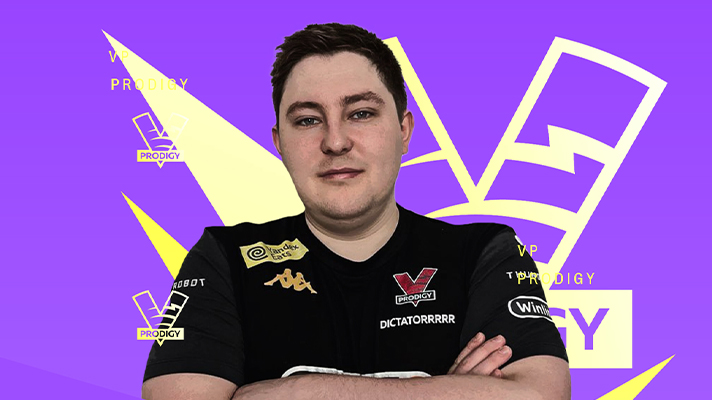
“What an Esports Psychologist Really Does”
Virtus.pro Academy psychologist Egor Karasyov explains esports psychology and why healthy habits still matter CS”.
“You rarely see ‘benched for mental reasons’ in public statements”: interview with the psychologist of VP Academy
A few years ago, full-time psychologists appeared in many esports teams. We decided to find out what exactly these specialists do and talked to Egor Karasyov, the psychologist of Virtus.pro Academy. In this interview he explains what an esports psychologist does day to day, how players burn out, what leads to success, and whether a “healthy lifestyle” really helps.
Let’s start from the very beginning. What does a psychologist do in esports and why is this role needed?
In general, a psychologist is there to maintain a healthy atmosphere in the team. My job is to make sure everything is fine, no one is at war with anyone, and any issues are solved quickly and calmly — both in-game and outside the game.
How is that different from a psychologist in a regular company, university, or school?
We’re in a sports environment. For example, I’m present at trials when we select new players. I can immediately tell how well a player is likely to fit into the team.
How long have you been working with Virtus.pro?
It’ll be two years in March. Right now I work with the youth rosters — Future and Prodigy.
Tell us more about how your work is structured. Do you attend all tryouts, matches, events? Can any player come to you with a problem and talk it through?
The main part of my work is with the Prodigy roster. I’m with them at officials, practice, bootcamps. I’m basically always there alongside the coach. They can always come and talk to me directly, bring up any topic. The same applies to the Future players — they’re younger, and I’m not with them constantly, but I’m still available.
The bulk of the work is observing the players and correcting communication during the game — resolving issues and misunderstandings together with the coach, dealing with hierarchy and boundaries.
In some Western teams — I think Astralis, for example — there was a “mental health coach”. Is that similar to what you do or something different?
I think the specifics there are a bit different. Most likely they had some kind of educational course for a limited period, not a permanent staff position. Our approach is different.
Can you walk us through a specific example? Say a player is very rude to a teammate in the middle of a game. After the match you come up and say: “You can’t do that”? How does this actually work?
The key is to help the player understand that this brings no benefit and to steer his thinking in the right direction so next time he knows how to behave. Just saying “that wasn’t good” is weird. You need to explain why it’s bad, how it could have been handled differently, so the player really understands and realises that this behaviour doesn’t add anything positive to the game — it creates pure destruction.
How do players usually react to comments like this? Are they okay with it?
If you talk calmly, they’re always fine with it. And we usually don’t do it in the heat of the moment but after the game, when everyone has cooled down a bit. We record almost everything — we save TeamSpeak recordings and then review them together with the players.
As a rule, the player understands, recognises the issue — and gets better.
It does sound a bit like a school psychologist, talking through how you behave with classmates…
That’s fair — we mostly work with kids, so it’s similar.
I originally wanted to talk about burnout, but maybe very young players don’t really have that yet. How often do you run into burnout?
In sports overall it’s a big problem, but with younger players it’s much rarer — we haven’t really had that in our academy. I think in youth sports burnout is less common because kids are very motivated, everything is still new and exciting for them.
What are the main psychological issues young players face?
For example, things related to cognitive specifics. Someone is so focused on crosshair placement that he forgets to give information. Someone else is the opposite — constantly talking and can’t focus on his aim at the right moment. There are many different factors that can hold players back. You just need to identify and work through them, sometimes add extra exercises in their free time.
We analyse these points together with the coach and try to find solutions.
How does getting into a profession at such a young age affect their future life? Can that become a problem?
Professional sports always have a strong impact on a child. They spend more time on sports instead of just hanging out with friends, family, playing football and so on.
But kids are very different. Some just sit at home and only play the game. Others, on a day off, run outside with friends and you can’t drag them back home. It depends on the kid, the parents, the upbringing.
We recommend that in their free time they step away from CS, talk more with people, spend time with relatives, play football. But they’re already grown-up enough to make their own choices about what’s comfortable and important for them in life.
What’s the most dangerous thing for an athlete’s psyche in a professional environment? Pressure to become the best? Early public exposure? The sheer volume of practice?
In traditional sports, injuries are a huge topic. In esports there are fewer of them, but they exist — back, arms, wrists especially. In football the main psychological issues come in the post-injury period: a player is afraid to hit the ball hard again or step fully on a leg after a knee or ankle problem. In CS we don’t really have that.
As for popularity, it’s similar to regular sports: pressure and criticism appear. I think betting has a much stronger impact on the psyche in esports than in traditional sports. People often “write off” losses on players: after a defeat they go to social media to complain that they “lost money because of you” and so on.
We just need to teach the kids not to pay attention to that. It’s written by people who, let’s say, aren’t very smart. A normal person will never message a player because of a lost bet. If they do bet, they stay calm about it. So in that sense it’s very similar to regular sports — you just need to teach players to ignore this kind of criticism.
If criticism comes from a coach or teammate, you need to think about why they’re saying it. But if some random stranger wrote something somewhere, you just ignore it.
How often do players face aggressive criticism on social media?
As soon as a player reaches a decent level and people start recognising him, the number of such messages grows. I’d say it’s proportional: maybe one person out of two hundred will definitely write something nasty. Subscribers in Telegram channels, VK — roughly every two hundredth will “fire off” something. It’s unpleasant, of course.
And then it depends on popularity — the more popular the player, the more of that stuff he gets.
Is there any difference between CS and Dota in terms of how often hate appears and how the games themselves affect players psychologically?
I don’t think there’s a big difference. They’re two different disciplines with their own specifics, but in terms of hate — it’s almost the same. You lost — someone will say something unpleasant. You won — you can still “ruin someone’s bet”, and a person will send you a nasty DM. Even if you played great or your team won, there’ll still be someone who calls you terrible just because they didn’t like something.
It’s the same person writing to both the losing team and the winning team, telling both they “ruined his life”. So you just have to be ready for that — in any sport and any esports. These people show up as your popularity and level grow.
Let’s talk about coaches. What role do they play in maintaining a healthy psychological climate? I assume you work closely with them?
Yes, we always work together. The coach gives players knowledge. Communicating that knowledge is an art in itself — the coach has to understand how to explain things correctly, so it’s not too hard and not too simplistic, to find that balance.
At the same time he has to be personally involved in the process and communicate calmly. Of course there are emotions — when you lose a painful round or something goes wrong. But the main thing is to keep your composure. In youth work that’s super important: to stay calm while explaining and teaching.
Does it happen that a coach notices a player being sad or nervous for a long time and asks you to pay special attention and help?
I won’t go into in-game details, but yes, different situations happen. Sometimes a coach specifically asks me to work through a particular topic with a player. Usually we talk about mindset and certain in-game patterns.
For example, tilt — we talk about why the person tilts, what triggers it, why it’s harmful. If the player becomes aware of it, he gradually learns to overcome it. It takes time — it doesn’t go away with a snap of the fingers. You need a bit of a run-up: first day, second, third, fourth… by the fifth it’s better, by the sixth a little better again. Step by step, over two weeks or a month, a person can come out of that state.
The biggest challenge for any psychologist is to help a person understand their problem. Often they simply don’t realise what is happening to them. And that’s the key: the person must recognise that there is a problem and that it needs work.
If they don’t understand and don’t want to change, then nobody can help.
How about managers or other staff who work closely with players? If a manager, for example, is depressed, can that influence the players’ condition and performance?
Honestly, we haven’t had such cases. Managers mostly communicate with the coach or with management. I think even if a manager had depression, the players might not even notice or understand it. Full-team meetings with a manager are rare.
If a coach, psychologist or analyst is constantly with the team, the manager only sees the whole roster maybe once a month — when there’s an important period or the end of a stage, and something needs to be discussed, results summarised, goals set for the season.
For the most part, day-to-day communication is between coach and players.
There’s still a belief in esports — and in society — that going to a psychologist is shameful. Do you see that? Is it still present among players and fans?
In the CIS we still have this mentality where people are reluctant to go to a psychologist, unlike in Europe. But slowly things are changing — people do seek help, psychologists appear both in esports and in traditional sports.
I don’t think there’s anything bad about it. If you have a problem and it can be solved — and you know a good specialist — why not go?
The only nuance is that some psychologists stretch work across a huge number of sessions — and you overpay for something that could be resolved faster. But overall, if there are real problems, it’s worth reaching out. The key is understanding whether you actually need a psychologist. That’s not always obvious, but most often people realise it thanks to those around them — someone hints, and that’s a reason to think about it.
Have there been cases in esports when players left the pro scene entirely because of burnout, depression, or other mental issues?
I’m sure it’s happened, but probably not much at tier-1 level. Tier-1 teams usually have psychologists, and even if mental issues affect performance, it rarely comes to a complete career stop.
And if such cases do happen, they almost always get hidden from media and fans. If a player is benched or takes a break for psychological reasons, you rarely see that written publicly.
It hurts the reputation of both the organisation and the player himself: even if he recovers, teams will look at him differently on the market. That’s why such stories almost never get officially published.
We mentioned that there’s more burnout in adult esports. Are there any general practices to fight it? Any approaches from sports or examples from Western teams?
If we speak in basic terms, the main thing is to find the cause of burnout. It could be monotony, external factors, overload. When you clearly understand the cause, you can work on it: change your practice approach, add something new.
Some people have been practicing the same way for five years. Sometimes small changes are enough: change your crosshair, your settings, resolution, equip a new skin or knife. It sounds silly, but the game starts to feel different and interest comes back.
In short, you need to change the things that lead to burnout — if you can.
How much does basic “healthy lifestyle” — sleep, water, nutrition — affect performance and mental state?
It matters for both regular people and athletes. If you don’t get enough sleep, your reaction and attention go down. Same with what you eat and how active you are physically — everything has an impact. Maybe not 100%, but 5–10% for sure.
We’ve had cases where we had to work specifically on sleep: players would write down when they went to bed and when they woke up so we could fix their schedule. At bootcamps we try to make sure they sleep 8–9 hours. The ninth hour is for the phone in bed, eight hours is actual sleep.
Like in a summer camp.
Exactly — because they’re still kids. At home the responsibility also lies with parents. We talk to them about how routine, sleep and nutrition influence results — not 100%, but significantly.
Is it possible to build a career in esports without ever burning out?
It depends on the person. Some players are extremely motivated and genuinely love the process. Everyone has moments of fatigue, but that’s not burnout. You rest, eat, go for a walk — and the desire comes back. Real burnout only happens when negative factors last for a long time.
I think most professional players have never reached true burnout.
How can you tell burnout from a situation where a life stage simply ended and it’s time to move on?
After burnout, people often change spheres — but it depends on the root cause. If the issue lies in the process itself (constant practice, competition), then maybe it’s worth changing careers. If it’s about some specific part of practice that can be changed, adjustments are enough.
What would you say to a 13-year-old who dreams of joining an academy and says they’re going to practice 24/7?
Around 90% of kids say that. All I can advise is: train, get better. If your results are high enough, we’ll take a look and test you.
And if he says: “I don’t go out, don’t play sports, don’t study — I only play.” Is that okay?
In reasonable amounts — yes. Many are truly passionate about the game and ready to work a lot. To reach at least academy level, you have to put in time. But no one says “don’t eat, don’t drink”. There’s common sense.
The problem is that today he’s on fire, tomorrow he’s on fire, and in a month things don’t work out — and he quits. That happens a lot.
I’m more about balance — when a person doesn’t understand that life is bigger than a single goal.
Sport and esports are always a risk. Only a few make it to the top. Both the player and the parents need to understand that. Sometimes a person sits at the same level for two years — that means there’s not enough work ethic or not enough talent.
To reach a high level, you need a lot of things to line up: luck, hard work, natural skill, a good coach, a strong team around you. There are many factors. And very often a talented 16-year-old is standing in the same place at 20. That’s common in both sports and esports.
And finally: what would you change in esports or organisations to make life psychologically easier for players?
It’s a tough question. Esports has many structures: organisations, federations, different tournament formats, different approaches to building teams and coaching staffs. It’s hard to answer globally — you’d have to discuss each area separately.
Speaking about organisations, ideally there should be a psychologist. But there are also mix teams that get players from a region together for a week to play a Cup or National Championship. How can a psychologist do much in a week? In that time he can only really get to know the players.
These short-cycle teams are the majority. So there is no universal solution.
Original →